Halloween at QQEnglish: More Than Just Costumes
Elementor #200814

I’m excited to announce that I’ll be appearing on a special episode of TV Tokyo’s Sunday Platinum Hour!

The show will air on Sunday, November 9, from 6:30 p.m. during a two-hour prime-time slotIf you’re familiar with Sunday Platinum Hour (formerly Sunday Big Variety), you’ll know it’s the program behind some of my favorites like Police 24 Hours and Drain the Pond!—always packed with fascinating and entertaining ideas.
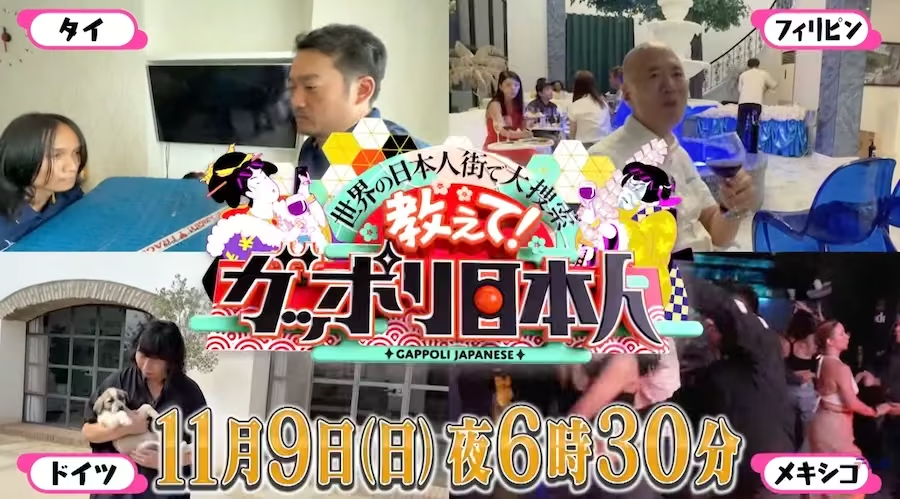
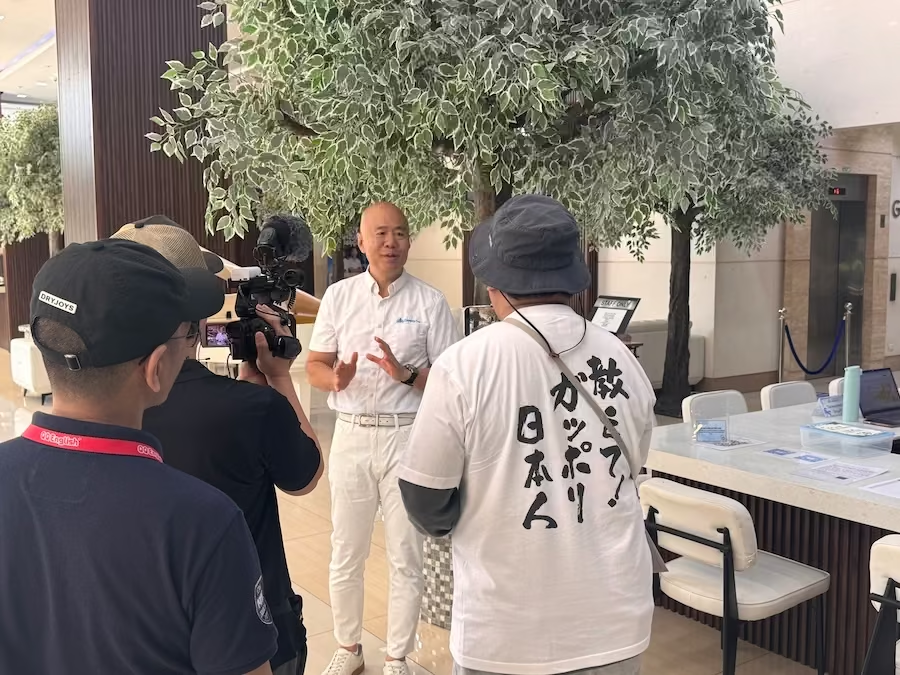
This time, the special episode is titled “Teach Us, Gappori Japanese!”, and I’ll be featured as part of the show.
Elementor #200814
To be honest, calling me a “Gappori (big money-making) Japanese” isn’t quite right. I actually run an English school on a very tight budget. But I decided to join the program because I wanted more people to learn about life overseas — and hopefully inspire even one more person to step out into the world and pursue their dreams.
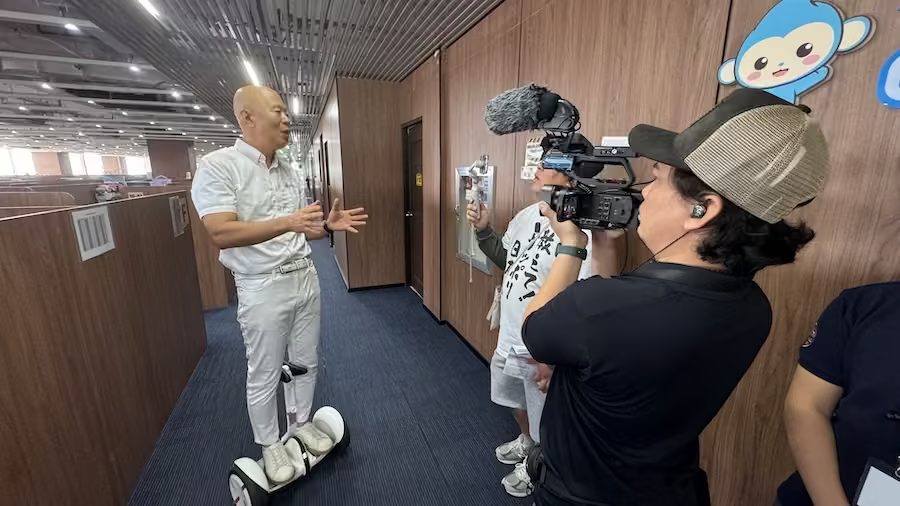
That said, the filming schedule couldn’t have been worse. We shot in Cebu on October 1st and 2nd, right after the devastating Cebu earthquake.
— Some of you might remember that day —
When the earthquake struck, there were about 3,000 teachers, 500 staff members, and 400 students at QQEnglish. It was a rare, strong quake for Cebu, but since the epicenter was more than 100 kilometers north of the city, thankfully there were no injuries or damage at our school. However, 254 of our teachers’ families were affected in their hometowns.
The morning after the earthquake, we organized a relief team at QQEnglish. We sent out three trucks loaded with supplies to help the victims in the affected areas.
On the show, I might have seemed like a “Gappori Japanese,” but deep down, I was extremely worried the whole time.
Even though filming had already begun, I was so relieved when we finally confirmed that all of our teachers’ families were safe.
Elementor #200814
To be honest, calling me a “Gappori (big money-making) Japanese” isn’t quite right. I actually run an English school on a very tight budget. But I decided to join the program because I wanted more people to learn about life overseas — and hopefully inspire even one more person to step out into the world and pursue their dreams.
That said, the filming schedule couldn’t have been worse. We shot in Cebu on October 1st and 2nd, right after the devastating Cebu earthquake.
— Some of you might remember that day —
When the earthquake struck, there were about 3,000 teachers, 500 staff members, and 400 students at QQEnglish. It was a rare, strong quake for Cebu, but since the epicenter was more than 100 kilometers north of the city, thankfully there were no injuries or damage at our school. However, 254 of our teachers’ families were affected in their hometowns.
The morning after the earthquake, we organized a relief team at QQEnglish. We sent out three trucks loaded with supplies to help the victims in the affected areas.
On the show, I might have seemed like a “Gappori Japanese,” but deep down, I was extremely worried the whole time.
Even though filming had already begun, I was so relieved when we finally confirmed that all of our teachers’ families were safe.
Elementor #200814

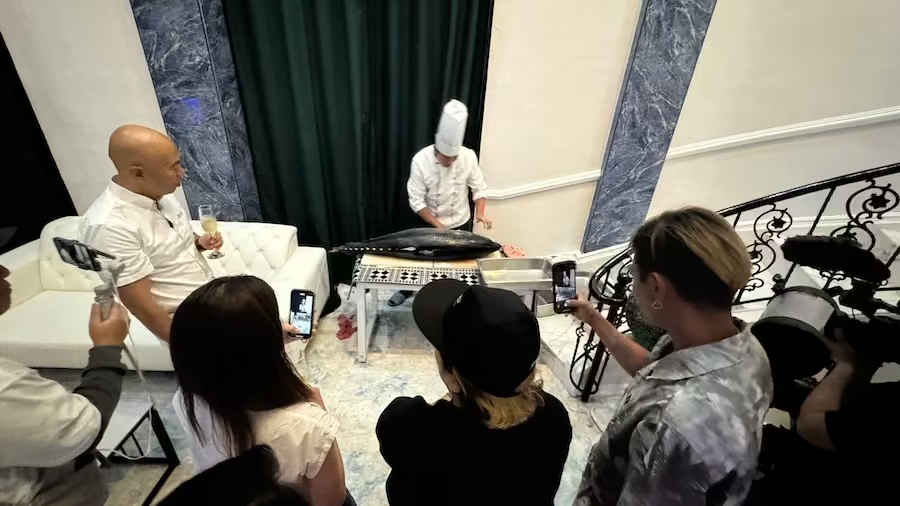
My house is built on a narrow hillside lot, so it ended up being four stories tall. It’s actually a bit tight for something like a tuna-cutting show, but thanks to the beautiful, Instagram-worthy view and the director’s great filming skills, the footage turned out amazing!

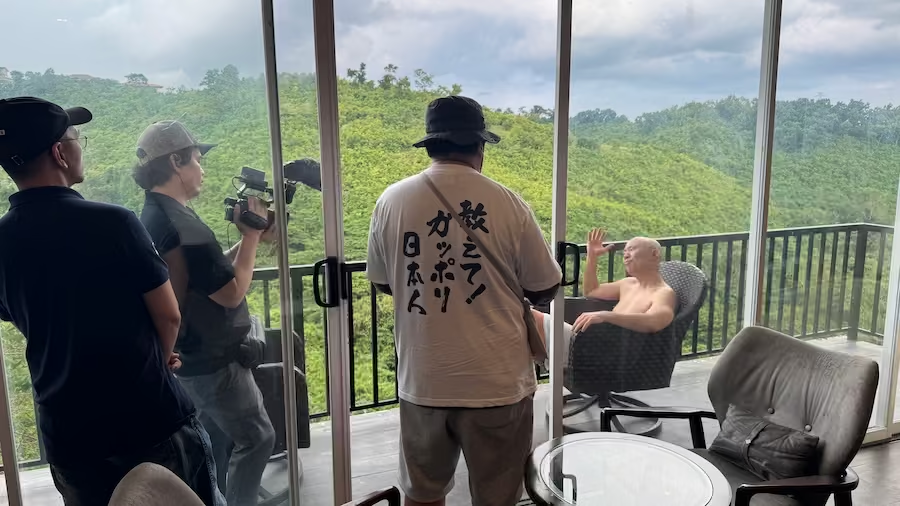
What makes this house even more special is that it was hand-built by the carpenters from QQEnglish.
We have two campuses in Cebu, and since maintenance is required 24 hours a day, we employ about 30 full-time carpenters. When there’s no major renovation work to be done at the schools, they use that time to help with projects like my house.
It’s truly a home built with care by our own team, and I’m incredibly proud of it.
Elementor #200814
When I say my house is four stories, it might sound impressive, but in Cebu, wealthy homes are usually single-story mansions on huge lots, often with a pool.
My house, on the other hand, is built on a narrow hillside and has no pool, so by local standards, it’s definitely not a mansion. Still, on TV, that’s not obvious, so it worked out fine!
My life is far from the “Gappori Japanese” image—they definitely weren’t showing a life of luxury—but I saw this as a great opportunity to show the real side of living and working overseas, so I decided to go for it.
Honestly, I hesitated about sharing my private life on TV, but I hope that by doing so, even one person might be inspired to explore life or work abroad. That’s why I took the leap and appeared on the show.
Elementor #200814

This episode will air nationwide on the TV Tokyo network.

If you happen to miss it, it will also be available later on TVer, so please check it out!
I’ll be showing a very embarrassing side of myself during Sunday prime time, but I’d be happy if you gave it a watch.
Honestly, living like this in Japan would probably cost hundreds of millions of yen—it’s just not possible there!
Scroll to Top